The Forensic Analysis Methodology
Acquired from 5,000 industry observations over a 5-year window across 6 domains.
Unlike traditional maturity models based on theory or subjective experience, this model is built on evidence. It was developed through a rigorous, data-driven synthesis of the global AI landscape, following a systematic six-phase process designed to bridge the gap between theory and the complex reality of enterprise AI implementation.
Phase 1: Comprehensive Data Acquisition
The foundation of this model is a massive repository of over 5,000 distinct observations extracted from high-authority reports. The acquisition process was governed by two strict protocols:
1.1. Temporal Scope: The Five-Year Relevance Window
Data was limited to the last five years to avoid obsolescence and "recency bias." This window captures the critical transition from the "Predictive Era" to the "Generative" and "Agentic" Eras, ensuring the framework is grounded in enduring lessons while calibrated for modern challenges.
1.2. Source Diversification: The Six Domains of Authority
To ensure a holistic view, data sources were curated from six distinct domains:
- Management Consulting & Advisory Firms (e.g., McKinsey, Deloitte)
- IT Research & Analyst Firms (e.g., Gartner, Forrester)
- Global Policy & Regulatory Bodies (e.g., NIST, OECD)
- Technology Leaders (e.g., Google, Microsoft)
- Security & Research Institutes (e.g., MITRE, OWASP)
- Authoritative Media (e.g., HBR, MIT Sloan)
1.3. Quality Control and Bias Mitigation
We applied rigorous screening protocols including "Data Isolation" (separating raw data from interpretation) and "Adversarial Triangulation" (accepting findings only if observed across conflicting incentives).
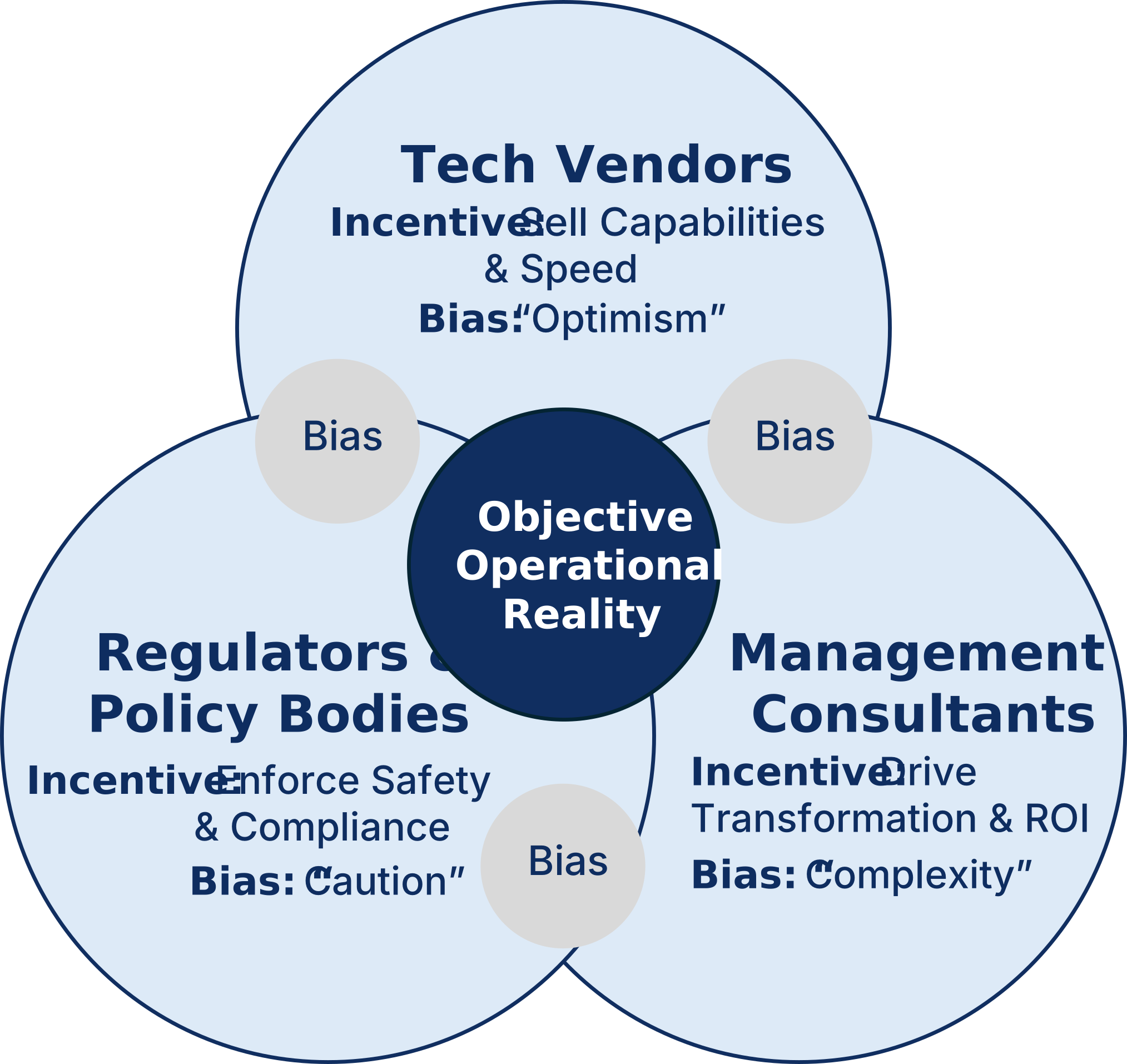
Figure 1: The Triangulation Method
Phase 2: Pattern Recognition and Pillar Identification
We employed Inductive Thematic Analysis to transform observations into a coherent framework. Through Open Coding, Axial Coding, and Selective Synthesis, ten distinct functional domains (pillars) emerged.
The data revealed critical distinctions, such as:
- Decoupling the "Super-Pillar": Splitting Technology into Data, Infrastructure, and MLOps.
- The "Compliance-Breach" Paradox: Establishing Security as a separate pillar from Governance.
- The "Ambition" Divergence: Refining Strategy to measure ambition, not just the presence of a plan.
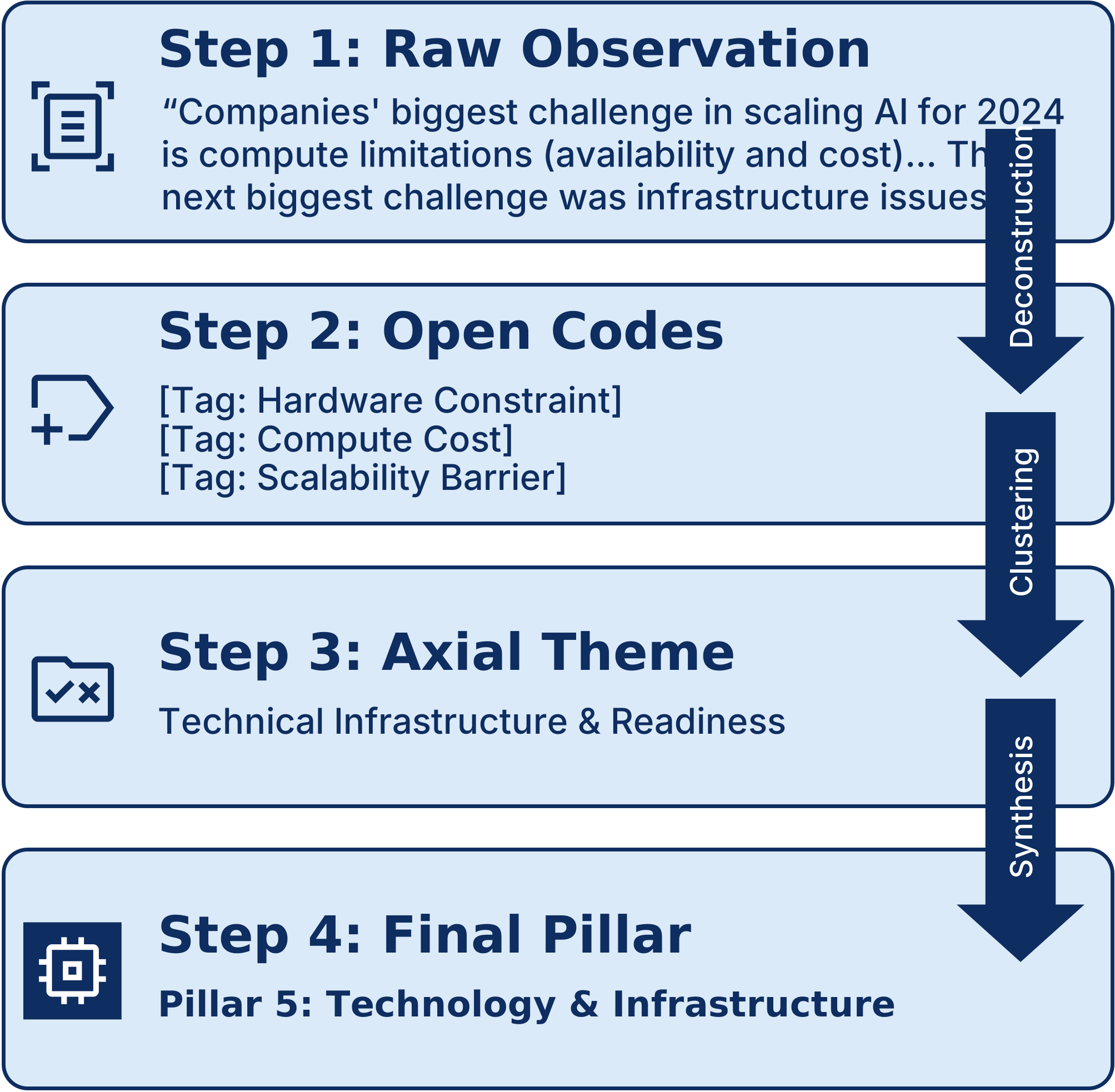
Figure 2: From Observation to Architecture
Phase 3: Dimensional Identification
To increase resolution, we applied Dimensional Deconstruction using a "Functional Independence" test. We asked: Can Capability A exist without Capability B? If yes, they are distinct Dimensions. This process revealed that most pillars saturate at six distinct dimensions.
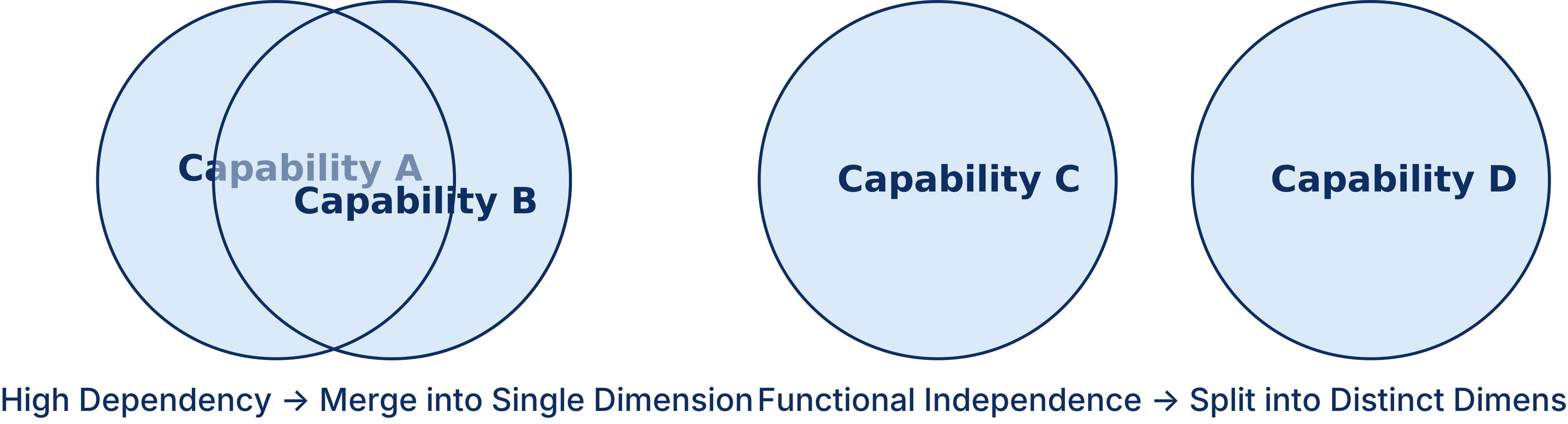
Figure 3: The Functional Independence Test
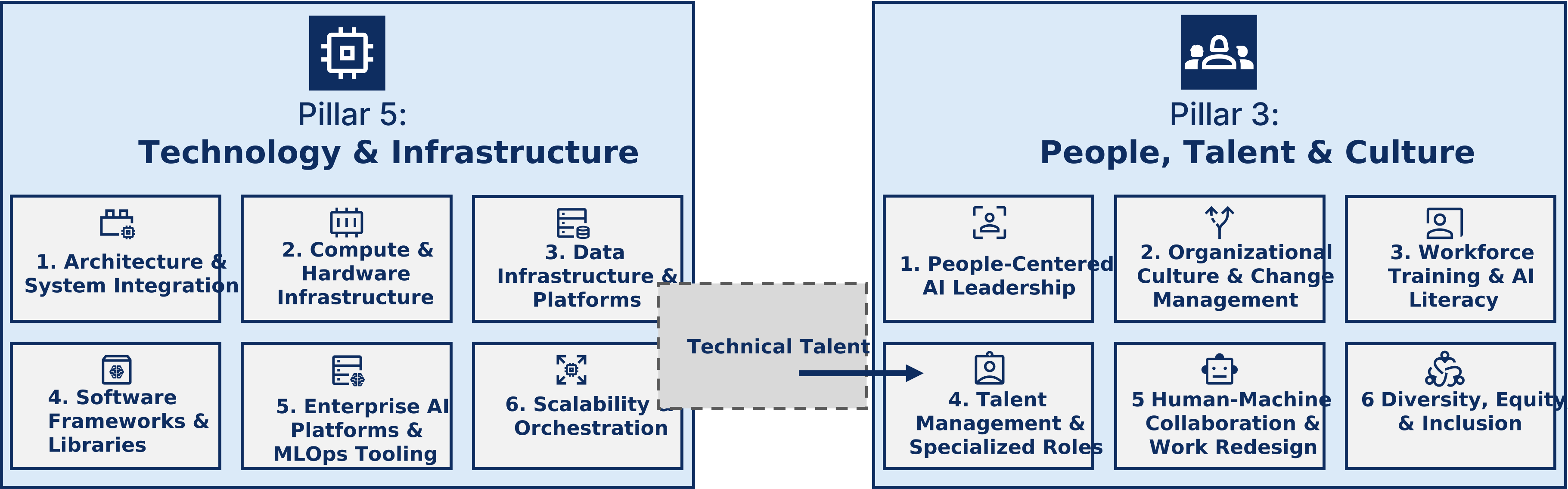
Figure 4: Enforcing the Boundaries
Phase 4 & 5: Rubric Construction and Calibration
We constructed a 5-Stage Rubric based on empirical evidence, mapping distinct "Transition States" observed in the market. The model is also aligned with CMMI V2.0 levels for interoperability with global enterprise standards.
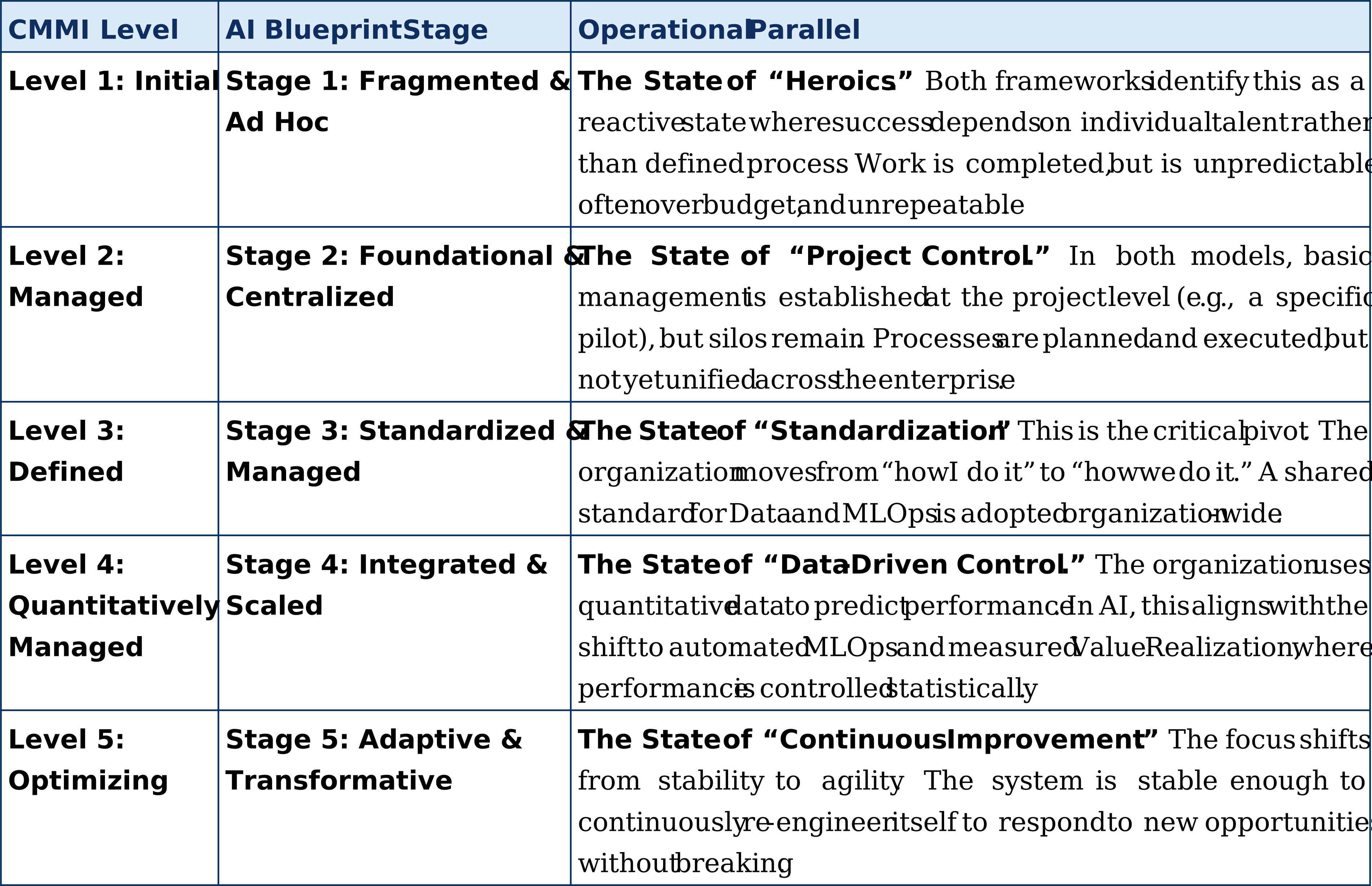
Table 1: CMMI Alignment
Phase 6: Field Validation
The model was field-tested across diverse organizations to validate its diagnostic accuracy. This "ground truth" testing refined the model, confirming that visible tools (like chatbots) are insufficient indicators of maturity and that "Strategy" without "Budget" yields false positives.
Conclusion
This rigorous methodological journey was conducted to discover reality, not prove a theory. The evidence demands a framework that is a holistic operating system for the enterprise—technologically agnostic, functionally interdependent, and strictly value-centric.